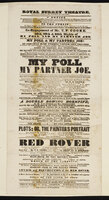
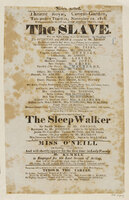
The play was performed at the time when British Navy action against slavers was at its height following the abolition of the transatlantic slave trade. It depicts scenes on a slave ship, a series of actions against slavers, the eventual 'downfall of slavery', and the ship's return to London.
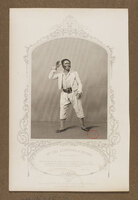
This popular comic opera was first performed in 1768 and tells the story of a rich old miser who imprisons his young wife. The play has metaphorical connections to the slavery debate through the reference to the padlock, which was associated with slavery, and through Mungo, the stereotypical comic black servant, who is the dynamo of the piece. Originally played by a white actor in blackface imitating a Caribbean voice, in this performance the role was played by Ira Aldridge, who apparently played against the stereotype.
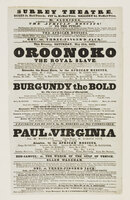
This tragi-comedy, based on the novella by Aphra Behn, was first performed in 1695. Oroonoko, an African prince sold into slavery, falls in love with Imoinda, also of noble birth and enslaved. Oroonoko leads a doomed rebellion, kills his pregnant love to prevent her and their child enduring any more suffering, and is, in turn, killed by the colonialists. Southerne added a comic sub-plot and made Imoinda white. The role of the Royal Slave in this performance was played by Ira Aldridge.
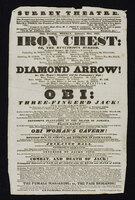
This melodrama is based on the story of the legendary Jack Mansong, an escaped Jamaican slave, who in 1780 organised a feared gang of escaped slaves and lost two of his fingers in a clash with the authorities. He was eventually captured thanks to the promise of financial reward and freedom. ‘Obi’ refers to the obeah ritual, in which Jack was an expert. In the play, emancipation from slavery is problematic because conditional on the murder of Jack by his peers. The role of Karfa (the Slave) will be later played by Ira Aldridge.
This musical drama is a reworking of Oroonoko emphasising liberty as a quintessential English value. A reviewer of the time described the opera as 'a positively poor composition, yet compared with others of its tribe it is infinitely preferable.' The role of Gambia, the Slave, was played by actor William Macready and later in 1825 by the famous African-American Shakespearean actor Ira Aldridge, known as the African Roscius.
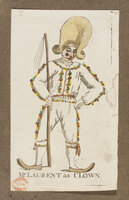
A despondent Black slave who is about to commit suicide is transformed by magic into Harlequin and marries the White planter master’s daughter. The slave rejects the option of becoming a Noble Savage, preferring to become the popular outsider figure of Harlequin. As such, the White actor (most likely in blackface) puts on the black mask of Harlequin. The figure possibly refers to the contemporary climate in Britain, towards emancipation and its idealisation.
The production explored issues around Black identity and was set during Notting Hill Carnival. It made use of various forms of Black music to underline the differences amongst Black people, reflecting the diversity of people from the African diaspora.
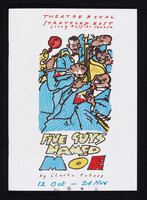
This musical, which later transferred to the West End, explored the life of Louis Jordan and other famous musicians of the 1940s and 1950s, in particular the role played by jazz and blues in Black culture. It was presented by five male performers, hence the title.
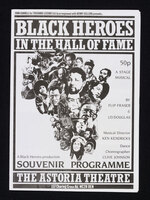
This musical play was a journey through Black history, presented in seven tableaux each with a main theme expressed through dance and songs. Amongst the many personalities presented on stage were Malcolm X, Marcus Garvey, Claudia Jones, Mary Seacole, together with a number of freedom fighters and Kings and Queens of Africa.
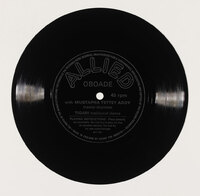
The show is a display of traditional and ritual drumming, singing and dancing from West Africa presented by a group of Ghanaian musicians. The programme explains that Oboade means 'ancient' in the sense of 'that which has been passed on through the ages'. Music pieces included Anl Ewes, Gome, Tigari, Bambaya and Kpanlogo.
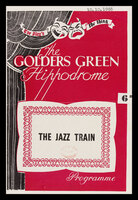
This musical travels through the life and times of jazz music. In the words of its central character, the Engineer, 'it started in the Congo a long time back. Got my fuel there/ From the beat of the drums. From the cry of the jungle/ from the call of the tribes.' The musical traced back the journey of African slaves through plantation songs and spirituals followed by spirituals, jazz, blues, jitterbug, be bop, calypso and much more.
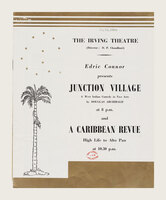
This was a Caribbean Season that included bot a comedy by Douglas Archibald set in the Caribbean, and a Review featuring a steel band, exotic dances, rituals and calypsos.