The play is inspired by the 1950s novel Brotherman by Roger Mais, and explores the vision and the spiritual profundity of Rastafarianism and the way it has shaped the culture and philosophy of Jamaicans. It retains the tragic narrative of the Christ mythos but, in contrast to the novel, it explores with greater attention the female characters, enhancing their roles.
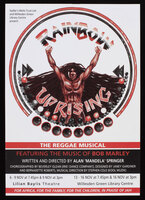
A dance drama in two parts: Reggae Ina Yu Jeggae and War Ina Babylon.
The production explores the development of reggae, a political and spiritual movement which evolved in the Caribbean
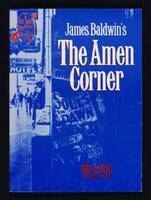
The production opened at the Tricycle Theatre and later transferred to the West End. Set in Harlem in the 1950s, it explored the life of a female preacher and her conflict with her family, congregation and ultimately Christian religion. The play was first produced in New York in 1965, making an impact for its characterisations, and exploration of the social dynamics of religion.
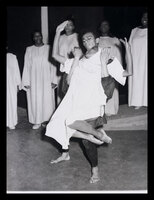
The production, featuring an all Black cast of American gospel singers and dancers, included a nativity play in which Mary and Joseph were represented by young dancers as the singers chant the stages of their story. The second half represented a church where faith was expressed through a variety of songs and 'jazzed up' spirituals. British-born Black actress Ida Shepley joined a West End revival in 1964.
The play is set in Trench Town, a deprived area on the outskirts of Kingston, Jamaica. It explores issues connected to religious superstitions and white domination through the life of a young woman, Della, who is torn between the desire to better herself through a relationship with a White doctor, or freeing herself and the community from the grips of its religious leader.
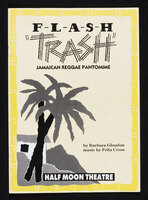
This was a Jamaican reggae pantomime, first performed in Jamaica by the Little Theatre Movement in 1985. The production reflected Jamaican folklore themes in its storyline, music, design and use of dialect.
Presented as 'the first West Indian-English pantomime', this production by Dark and Light presented Anansi, the Jamaican 'half-man, half-spider' folk hero, living in Brixton with his family and dealing with the racial prejudices of his local councillor. Referencing the political climate of the time and the role played by right wing anti-immigration politician Enoch Powell, this Jamaican Pantomime made an impression with audiences by representing the traditional folk hero within the British cultural context.
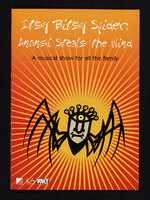
This musical show, aimed at all ages, explored the rich legacy of folklore from Africa through the main character of Anansi. As noted in the programme Anansi the Spider is one of the major trickster figures in African folk tales. The Anansi spider tales travelled from Africa to the Caribbean Islands and North America.
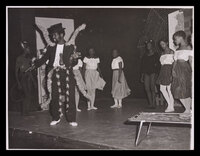
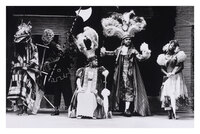
This production was based on the Jamaican practice known as Jonkunnu - when slaves originally celebrated two days of freedom at Christmas. It told the story of the famous 1841 carnival parade, which ended in a riot and led to the event being banned by the Mayor of Kingston. The writer featured puppets performing the ritual mummery to traditional music of fife, frums and conch shells, while the actors played the mummers of 1841 in costumes.
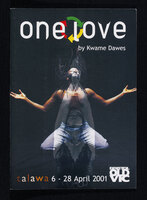
Based on a Ghanaian folktale, the play tells the story of Anowa, a beautiful girl who leaves behind her family and dancer-priestess destiny, to marry the handsome Kofi. The story reflects a familiar myth in many West African cultures and includes elements of pre-colonial Ghana as well as contemporary culture. The couple's relationship is progressively undermined by Kofi's greed for power and wealth, which he achieves by acquiring slaves.
This production of Gloudon's pantomime was presented as part of the Black Theatre Forum Season. The composer Felix Cross brought a Black British sensibility to the fusion of different styles of music from Jamaica (including Mento, Jamaican soul, R & B reggae and other elements from Jamaican folk music).