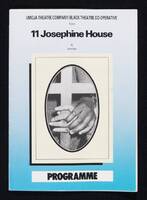
The play draws inspiration from a Jamaican burial rite, called Nine Nights, which helps troubled souls to cross over into the spirit world. In this play, the ritual refers to the cathartic experience of Hamon Williams, a retired immigrant from the Caribbean.
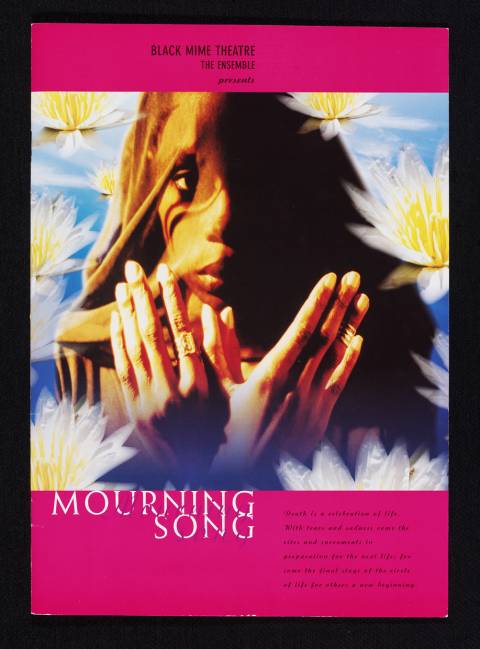
This performance explored the themes of death and grief and the strength of the human spirit. It was inspired by ancient and modern rituals from Africa, Asia and the Caribbean.
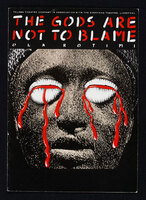
Produced in collaboration with Liverpool Everyman Theatre, the play is a Yoruba re-working of Oedipus the King. As noted in the programme, the director’s choice was based on her desire 'to bring together the disparate elements from our three cultural horizons, Europe, the Caribbean and Africa and to integrate them into a new harmony'. The play represented an important attempt to reconstitute Black British identity through the power of the arts, myth and memory.
This performance was set in contemporary Jamaica and interweaves a story of murder and revenge with events of everyday life, making use of singing, drumming and dancing.
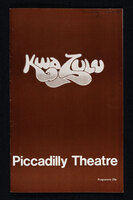
This is the story of two young lovers and the challenges they face within their tribe. The performance made use of traditional dances, songs and music to represent scenes of war, weddings and celebration of life.
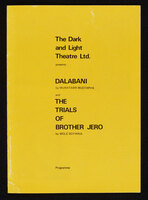
Part of a double bill also featuring The Trials of Brother Jero, the play is 'a satirical comedy about a phoney prophet, Dalabani' and takes the form of a dramatic poem exploring the spirit of Old Africa. The performance used a variety of dances, drums and rituals from Sierra Leone, the author's country of origin. The cast included Frank Cousins, the founder of the Dark and Light Theatre company - the first touring black theatre companies in England.
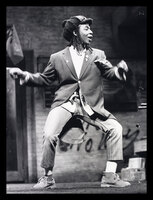
This performance, presented by the pioneering Black dance company Les Ballets Nègres, included three pieces, Blood, Market Day and De Prophet. The latter was based on a true incident that occurred in Jamaica. The ballet told the story of a religious maniac who tries to impress village converts by flying to heaven, and is eventually jailed as a 'lunatic'. Blood, also set on a West Indian island, made use of drums and 'tribal dances' to portray the voodoo cult which evoked memories of cultural belonging in the main female character.
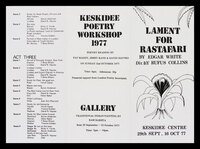
One of White’s most disturbing elaborations on the theme of slavery and migration, the play moves from Jamaica to England and America, and is developed in leaps of time. It interweaves realistic situations, surreal moments and monologues. The play is a reflection on the disruption of continuity following the violent physical and cultural uprooting imposed by European powers on African populations. The production was performed at a time when the Rastafarian movement was gaining popularity in the UK, calling for a re-appropriation of African values and aesthetics.
First performed at the Almost Free Theatre in 1972, the play is a romantic comedy set in St Paul's, Bristol, during the late 1960s. Focusing on the entwined relationships within a West Indian family, the play explores the way in which religion could bring love and respect in a community torn by the English system and way of life. It was co-produced by two leading Black British companies in memory of Alfred Fagon who died the previous year.
The play explores Rastafarian culture in Britain in an innovative and provocative way through the story of four young Rastafarians. Their ideals are tested by an older member of the group, Jacko, who has just been released from prison and is now advocating political action to change the system. The production was an instant success and toured nationally and internationally.
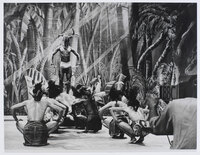
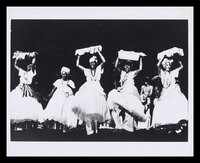
This was a programme of traditional dances including rituals such as Candomblé, and dances such as Malculelê, Capoeira and Samba de Roda originated in West Africa and developed in Brazil as forms of religious ritual dancing mixing African, European and South American Indian elements. The programme opened with a Candomblé ritual which, as a religion, is practiced in the Bahian region and other parts of Brazil and retains connections with African Voodoo. It included a Capoeira piece, a dance/fight based on a traditional African way of fighting with the feet, originally developed by Brazilian slaves to defend themselves and their freed villages.
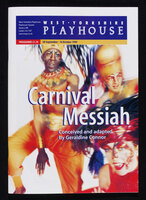
This production was a re-interpretation of Handel's oratorio, Messiah, within the aesthetic traditions of Trinidad and Tobago. The story, told by a cast of over 100 including a chorus recruited from the people of Leeds, represented Christ's life, death and resurrection using drama, various Caribbean forms of music and dance, and masquerade. Additionally, the production explored the parallels between Roman Catholic religion, Orisha religion, originally practiced by Yoruba people, and Trinidad Carnival practice.